


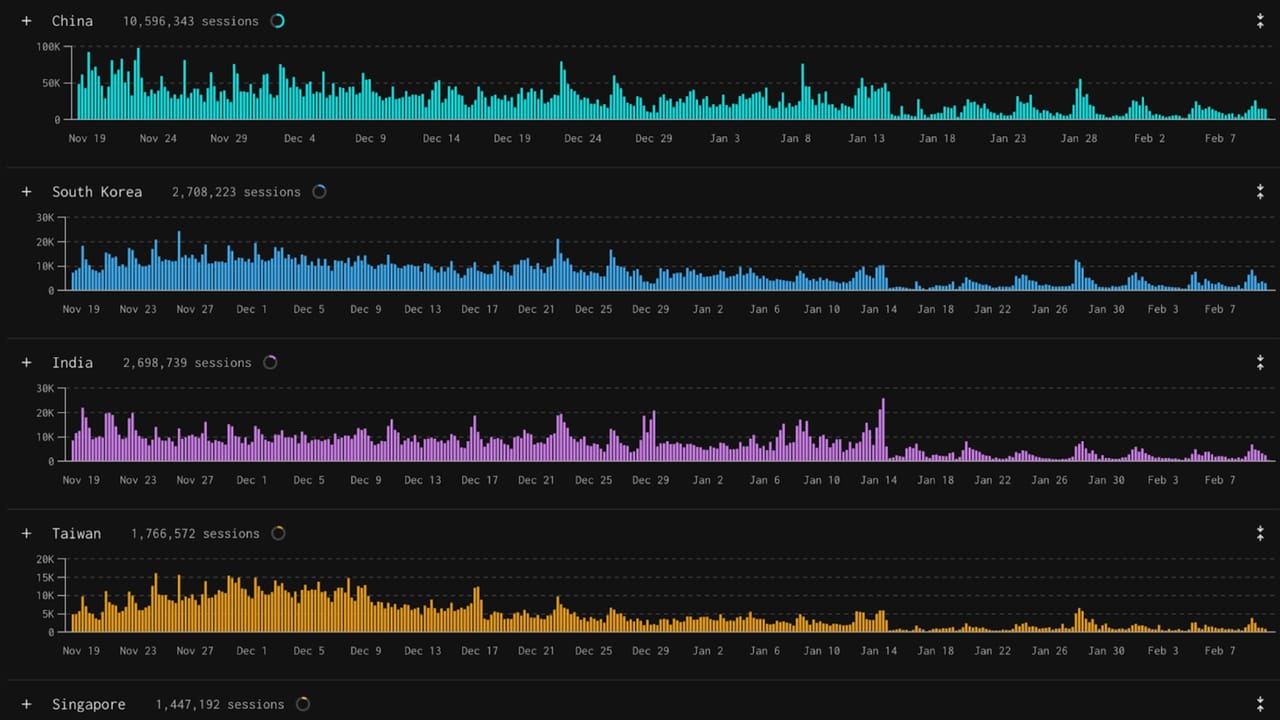
Despite a recent critical vulnerability and the general insecurity of the protocol, many devices and consumer-grade routers in the Asia-Pacific region still use the insecure Telnet protocol, highlighting the risks that the antiquated technology poses to businesses. Even though Internet backbone providers have recently reduced Telnet traffic, the issues still exist. According to data from threat intelligence company GreyNoise, Telnet traffic worldwide decreased by 83% in three hours on January 14 from roughly 65,000 sessions per hour to 11,000 sessions per hour.
However, companies in the Asia-Pacific area experienced some of the smallest declines, indicating that Asian network providers either chose not to block the dangerous protocol or failed to do so, according to Bob Rudis, vice president of data science at GreyNoise. According to him, network infrastructure and Internet backbone providers have had to quickly identify and block web-scraping bots and other automated traffic sources because AI-scanning activity has frequently resulted in router floods. Related: Student Sells Chinese Actors Government and University Websites Different parts of the world made some changes because "the folks that run ISPs and hosting and routers... their networks were just getting hammered and congested.
"According to Rudis, they modified the routers' responses to different network situations.
"We're simply going to cut off your connection and send you resets if you do this much traffic in [a specific period of time]."





