


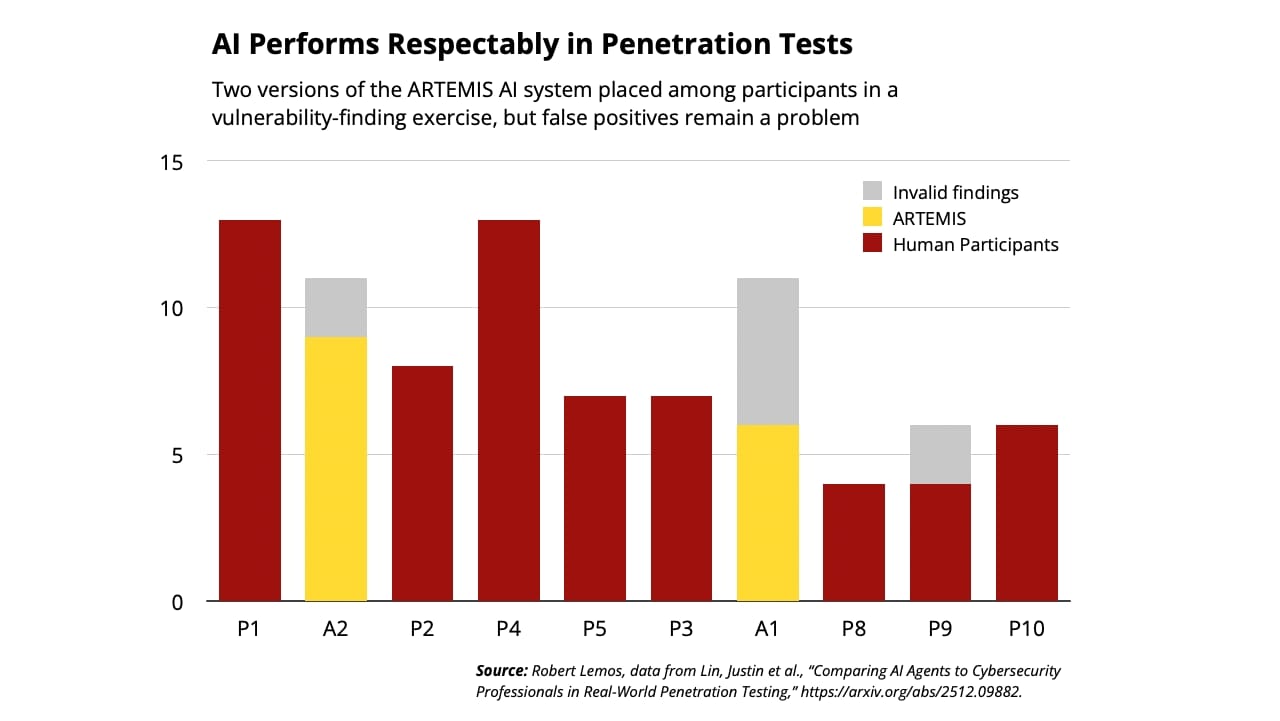
Large language models (LLMs) and artificial intelligence (AI) agents are already supplementing and even replacing many human pen testers, despite the fact that they still face substantial challenges in identifying vulnerabilities and performing penetration tests This article explores ai penetration testing. . According to experts, issues like false positives are still a major concern, and human ingenuity and creativity will remain crucial for identifying new or complicated vulnerabilities like timing attacks.
Nonetheless, the majority of penetration testers are already integrating AI technologies into their workflow, a use case that will only grow as AI pen-testing tools and services continue to advance rapidly. According to David Brumley, chief AI and science officer at Bugcrowd, a crowdsourced cybersecurity platform, technology is still improving.
According to him, "AI is inevitable, and it was just a question of when will we see it, and we've hit that point," However, according to an analysis by XBow, current agentic AI systems typically perform best on pattern-matching type problems, like identifying cross-site scripting (XSS) vulnerabilities, where humans can apply business logic and context around results. Related: Pen testers who were wrongfully imprisoned receive $600K from the county Sixty-seven percent of penetration testers use AI in some capacity.
Robert Lemos, using information from HackerOne Crowdsourced offensive-security services, according to their own analysis A hackerAccording to one study, AI penetration-testing tools struggle with tasks that require graphic user interfaces and exhibit a higher rate of false positives, or "hallucinations," indicating that the current generation of tools is effective for a broad but limited range of tasks. According to the company, the AI systems have several advantages, such as systematic coverage of the entire organization, more frequent testing frequencies, and improved performance on tasks requiring methodical enumeration, like identifying vulnerabilities at the infrastructure level.
According to Michiel Prins, co-founder and senior director of product management at HackerOne, this means that while AI can identify a wide range of possible problems, human penetration testers must follow suit to ensure accuracy and foster confidence in the outcomes. "It becomes less about the 500 or 1,000 pen testers and more about access to the world's top 1% or 2% of pen testers, which then provide that layer above and beyond what the AI tools can deliver," he says, adding that "elite pen testers with deep skills [will be needed] to augment those AI pen testing technologies and to provide additional insight and feedback loop into the pen testing process, so that the AIs can continue to learn and continue to adapt."





