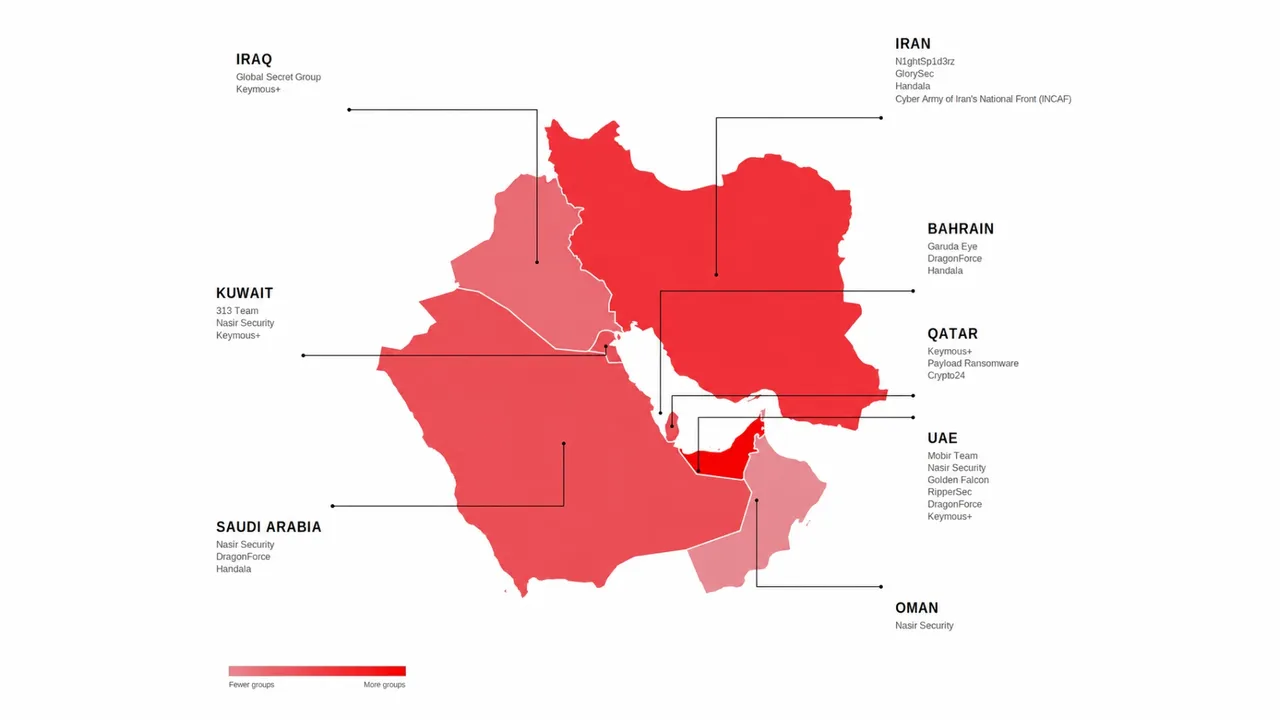
The Middle East is experiencing an increase in cyberattacks, with a rise in financially motivated threats despite efforts to address the growing military conflict in the region This article explores worldwide reported cybersecurity. . The United Arab Emirates, Iran, and Saudi Arabia collectively accounted for approximately two-thirds of all attacks detected through open-source methods, which scan Dark Web forums and threat actors' Telegram channels.
"However, financially motivated cybercriminals are also actively targeting various infrastructure." Related: Cybercriminals Hack Brazilian Government Servers to Host Phishing Sites Positive Technologies leverages open-source intelligence (OSINT) from Dark Web forums, Telegram channels, and aggregators tracking website defacements, malware operations, and DDoS attacks.
Organizations in the UAE and Saudi Arabia saw nearly 2,700 attacks per week over the past six months, compared to about 2,300 attacks per week for typical organizations worldwide, as reported by cybersecurity firm Check Point Software Technologies. "These advanced threats focus on stealthy infiltration of critical infrastructure, establishing persistence, and gathering data." Gross domestic product alone is not enough to explain the targeting of certain countries, says Shalev Hulio, CEO and co-founder of Dream Group, a Tel Aviv-based sovereign AI firm.
AI-assisted attackers will test nearly the entire attack surface, finding any vulnerabilities in outdated infrastructure, a significant issue in industrial automation, where widespread IoT use adds extra risk across the entire sector, she says.
![Top 10 Best Decentralized Identity Solutions in 2026 [Ranked & Scored]](http://cybersecuritynews.com/wp-content/uploads/2026/09/Best-Decentralized-Identity-Solutions-1.webp)